What Happens When NIH Stops Asking for Animal Experiments?
Written by Emily R. Trunnell, Ph.D.
July 2025
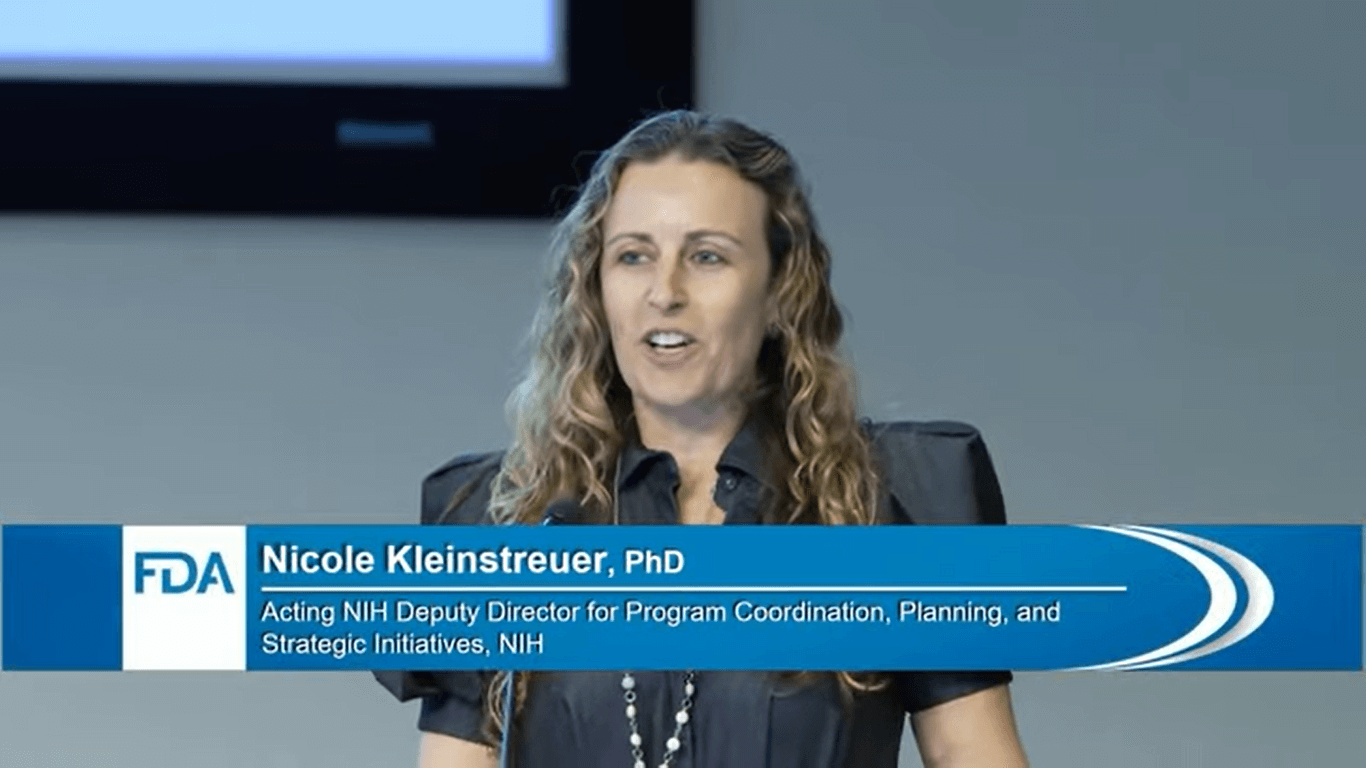
In a July 7 joint webinar by the National Institutes of Health (NIH) and the Food and Drug Administration (FDA), Acting NIH Deputy Director for Program Coordination, Planning, and Strategic Initiatives Dr. Nicole Kleinstreuer announced that the agency would “no longer seek proposals exclusively for animal models”1 and that all new funding opportunities will include language on the consideration of non-animal methods (NAMs).
Let’s cut through the misinformation and dive into what this means in practice.
NIH’s history of animal-only funding calls
NIH releases information about new funding opportunities or funding priorities in various ways. A formal announcement that invites scientists to submit grant applications is called a notice of funding opportunity, or a NOFO for short (in the past, these were called funding opportunity announcements, or FOAs). NIH has previously released NOFOs that explicitly called for the use of animals either to create new animal models of human disease or as a general “resource” in experimentation.
For example, NIH has put out funding calls specifically asking researchers to:
- Use monkeys in HIV experiments
- Create new animal models for HIV and AIDS research, even though the virus and condition are human-specific
- Create human cell-mouse chimeras for HIV experimentation
- Create new small animal models of Hepatitis B and C
- Genetically engineer mice to carry lethal mutations
- Genetically engineer animals to approximate Down syndrome, which is also human-specific
- Subject monkeys to unnecessary organ transplantation
- Addict animals to abused substances and then study their genes, even though animals are poor models for human substance use disorders
- Purchase new equipment for use in animal experiments, including devices for invasive surgeries
- Create “unconventional” animal models of Alzheimer’s disease, another condition that’s human-specific.
- “[D]evelop, improve, characterize, and preserve animal models as well as animal model related biological materials,” which could include genetically engineering or cloning animals, or even requiring that animals be used to test human-based, non-animal methods.
Animal-only NOFOs have also historically funded the nation’s seven National Primate Research Centers and various Mutant Mouse Resource and Research Centers around the country.
With this new announcement, NOFOs like these will never see the light of day. This will likely lead to a reduction in the number of animals used in experiments, as scientists often design studies to fit the requirements of NOFOs and will spare animals involved in pilot studies that would have been conducted to support those grant applications.
A first step in NIH’s broad policy shift
NIH’s new announcement doesn’t mean the agency will stop funding all new projects that only use animals—an outcome we’re still working hard for—but they will no longer specifically ask for them. If NIH funding for animal experiments were a tree, this move hacks off a large rotting branch.
It also means that for every new funding announcement, researchers will have the option to use NAMs. Young scientists will no longer be told that they must do experiments on animals to secure funding for their work.
As Dr. Kleinstreuer put it:
“[T]he scientific and regulatory infrastructure that was built around animal models has been entrenched in decades upon decades of historical use. Our responsibility now is to build an even more robust system around NAMS so that we don’t ever have to go backwards to relying upon animal models and instead we can go forwards to relying on human biology-based methods.”1
The July 7 declaration is one of the first public-facing steps the agency has taken following its April announcement on moving away from experiments on animals and toward human-relevant science. Progress like this wouldn’t be possible without the decades of work that Dr. Kleinstruer and her team have led behind the scenes, including globally advancing methods that have spared countless animals from having chemicals forced into their eyes, injected into their skin, or fed to them for their entire life.
Animals in laboratories need lasting change—not just political posturing—which requires a strategy that drives strong policy, fosters research breakthroughs, and safeguards progress from being undone by future administrations.
In Dr. Kleinstreuer’s words:
“I really want to emphasize that we’re not just investing in NAMs. We’re creating the policy, infrastructure, and partnerships that make that sustainable adoption possible. So that we’re not just shutting down animal labs overnight. We are actually developing long-term solutions that ensure that there are no new animal labs that open up in their place…This is how we go from one-off pilot studies to policy. This is how we evolve from just making progress to actual permanence in this space.”1
- FDA & NIH Workshop on Reducing Animal Testing.; 2025. Accessed July 7, 2025. https://www.youtube.com/watch?v=vz1uF42wnKQ